Sixty Seconds to Relapse: How Quick-Fire Betting Is Reshaping the Brains of Problem Gamblers
The Bet That Takes Less Time Than Making a Cup of Tea
There was a time when placing a bet required a degree of effort. You walked to the high street, queued at the counter, filled out a slip, and waited — sometimes for hours — to learn the outcome. That friction, however frustrating it may have seemed to punters, served an unintended protective function. It created space between the impulse and the action.
That space has all but disappeared.
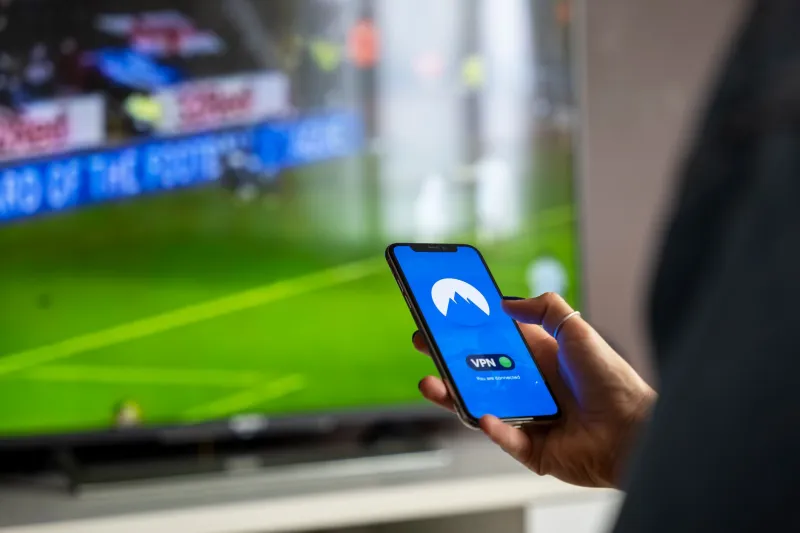
Today, a person can open a betting app, place a live in-play wager on the next corner kick in a Championship match, and receive a result within ninety seconds — all without leaving the sofa, pausing a television programme, or even putting down their phone. The entire cycle from impulse to outcome can be completed faster than it takes a kettle to boil.
This is the world of micro-gambling: short-burst, rapid-resolution betting that has become one of the defining — and most concerning — features of the modern UK gambling landscape.
What Neuroscience Tells Us About Short-Loop Rewards
To understand why micro-betting poses a distinct threat to those in recovery or at risk, it helps to understand what happens in the brain during a gambling episode.
When a person places a bet, the brain releases dopamine — a neurotransmitter associated with anticipation and reward. Crucially, research consistently shows that dopamine is released not at the moment of winning, but during the period of uncertainty between the wager and the outcome. The brain, in essence, becomes intoxicated by the possibility of reward rather than the reward itself.
Traditional gambling formats — a Saturday afternoon accumulator, a weekly lottery ticket — involve relatively long intervals between bets. The brain's dopamine system has time to recalibrate. With micro-betting, however, that interval is compressed to seconds. Each resolved bet immediately triggers the urge to place another, because the brain is still flooded with anticipatory dopamine and craves a new cycle of uncertainty.
Over time, this rapid-loop pattern physically alters neural pathways. The prefrontal cortex — responsible for impulse control and rational decision-making — becomes progressively less effective at overriding the reward-seeking signals generated by deeper, more primitive brain structures. This is not a metaphor. Neuroimaging studies have demonstrated measurable differences in the brains of people with gambling disorder compared to non-gamblers, particularly in regions governing self-regulation.
Micro-betting accelerates this process. Where a traditional gambling habit might take months or years to embed these neural changes, short-burst formats can achieve the same effect in a compressed timeframe.
'I Didn't Even Realise I Was Gambling'
For many UK gamblers, the insidious quality of micro-betting is precisely how unremarkable it feels in the moment.
Darren, a 34-year-old from Leeds who registered with GamStop after recognising his gambling had become unmanageable, describes the transition from traditional betting to micro-sessions as almost imperceptible. "With the bookies, I knew I was gambling. I'd set aside a Saturday, I'd think about it, I'd feel the anticipation. With the app, it just crept into everything. I'd be watching a match and suddenly I'd placed six bets in twenty minutes on things that didn't even matter to me — next throw-in, next yellow card. I wasn't even enjoying it. I was just... doing it."
This dissociation from the act of gambling is a commonly reported feature of micro-betting. The speed and mundanity of the individual transactions can make them feel less like gambling and more like a background activity — something done passively while watching television or waiting for a bus. This perception is precisely what makes the format so dangerous.
Emma, a 28-year-old from Bristol who sought support through a gambling helpline after a micro-betting habit escalated her losses significantly within three months, recalls a similar experience. "I thought I was being responsible because I was only doing small bets. A pound here, two pounds there. But I was doing it constantly. I'd check my account at the end of the week and I'd lost more than I ever had when I was betting big."
The Design Is Not Accidental
It would be a mistake to attribute the addictive quality of micro-betting solely to neuroscience. The products themselves are engineered to sustain engagement.
Live betting interfaces are designed to present a continuous stream of wagering opportunities, each with its own countdown timer creating artificial urgency. Odds fluctuate in real time, triggering the cognitive bias known as loss aversion — the powerful human tendency to act quickly to avoid a perceived loss. Push notifications alert users to 'enhanced odds' or 'live opportunities' at precisely the moments when they are most likely to be watching relevant sports content.
Many platforms also offer cash-out features that allow gamblers to settle bets before an event concludes. While marketed as a tool for responsible gambling, research suggests cash-out functionality can actually increase the frequency and duration of gambling sessions, as users become absorbed in monitoring live odds and deciding whether to exit or hold their position.
For someone in recovery, these design features represent a particularly acute threat. They are calibrated to exploit the same neural vulnerabilities that the addiction has already heightened.
Recognising the Pattern Before It Escalates
Identifying micro-gambling as a problem requires a shift in how we define a 'gambling session.' If you are accustomed to thinking of gambling as a discrete, bounded activity — a trip to the bookmakers, an evening at a casino — the scattered, bite-sized nature of micro-betting may not register as gambling behaviour at all.
The following warning signs are worth monitoring honestly:
- Frequency over amount: Are you placing bets multiple times per day, even if individual stakes are small?
- Passive triggering: Do you find yourself opening a betting app out of habit, without a conscious decision to gamble?
- Event indifference: Are you wagering on sporting events or outcomes you have no genuine interest in, simply because they are available?
- Session creep: Do short betting episodes regularly extend beyond the time you intended to spend?
- Mood dependency: Do you feel restless, irritable, or distracted when you are unable to place a bet?
If several of these patterns resonate, it is worth taking them seriously — regardless of the monetary amounts involved.
Practical Strategies for Interrupting the Loop
Breaking a micro-betting habit requires specific interventions that address its particular characteristics.
Register with GamStop. If you hold accounts with UK-licensed gambling operators, self-exclusion through GamStop will block access across all of them simultaneously. This removes the immediate availability that micro-betting depends upon. Visit gamstop.co.uk to register.
Use device-level blocking tools. GamStop's exclusion operates at the account level. Complement it with software such as Gamban, which blocks gambling content at the device level, preventing access even to sites where you do not hold an account.
Disable notifications. Remove gambling apps from your home screen and disable all push notifications before you have the opportunity to self-exclude. Reducing environmental triggers is a meaningful first step even before formal support is in place.
Create deliberate friction. The power of micro-betting lies in its effortlessness. Restoring friction — logging out of accounts after each session, deleting apps, requiring a waiting period before placing any bet — can create the cognitive space needed to engage your prefrontal cortex before acting on impulse.
Seek structured support. The National Gambling Helpline (0808 8020 133) offers free, confidential support. Cognitive behavioural therapy has a strong evidence base for gambling disorder and is available through the NHS in many areas.
The Smallest Bet Can Have the Largest Cost
The normalisation of micro-betting in UK culture — embedded in sports broadcasting, advertised relentlessly during live matches, and available at all hours through devices we carry everywhere — has made it easy to underestimate its potential for harm.
But the size of an individual bet is not a reliable measure of its risk. For someone whose brain has been shaped by gambling disorder, a one-pound in-play wager carries the same neurological charge as a much larger stake. The loop is the same. The dopamine is the same. The erosion of control is the same.
Recognising this is not a counsel of despair. It is the first step toward an accurate understanding of what you are dealing with — and accurate understanding is the foundation of effective action.