Dealer, Danger, Doorstep: How Live Casino Streaming Turns Your Home Into a Gambling Venue

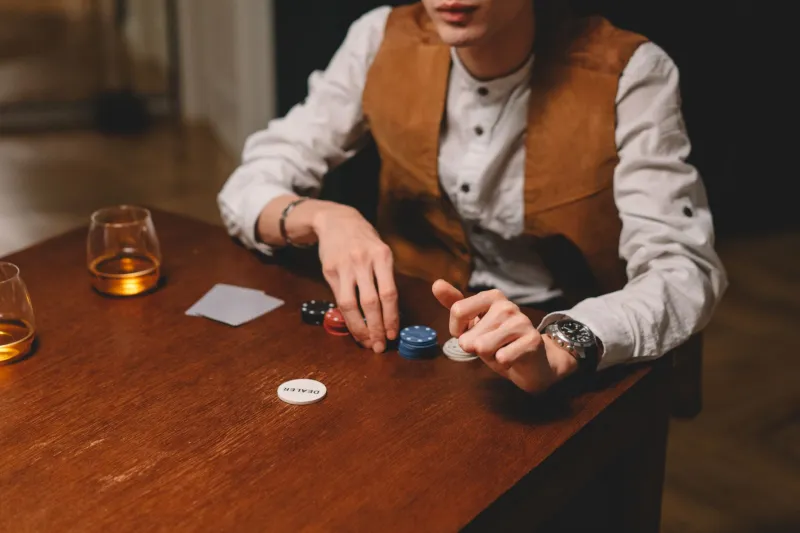
There is something quietly unsettling about sitting in your living room, in your own armchair, perhaps with a cup of tea on the table beside you, and finding yourself inside a casino. Not metaphorically — but experientially. The felt-topped table is real. The cards are real. The smiling presenter addressing you by your username is a real person in a real studio, and the money leaving your account is unambiguously real.
Live dealer gambling has grown into one of the most commercially significant segments of the UK online gaming market. Platforms such as Evolution Gaming, which powers live tables across dozens of licensed operators, now broadcast around the clock from studios designed with extraordinary precision to evoke the atmosphere of Mayfair gaming rooms or Las Vegas floors. The production values are high. The psychological engineering is higher still.
For anyone who has registered with GamStop or is actively managing a gambling problem, understanding precisely how this format operates — and why it is distinct from other forms of online wagering — is not merely academic. It is protective.
The Architecture of Artificial Intimacy
Conventional online slot machines or RNG (random number generator) table games are, at their core, software. They are engaging, and they can be addictive, but they do not speak to you. Live dealer games do something fundamentally different: they introduce a human face.
Dealers are trained not simply to manage the game but to perform warmth. They greet players by name, acknowledge wins with enthusiasm, offer sympathetic remarks after losses, and sustain a constant patter of friendly conversation. Research into parasocial relationships — the one-sided emotional bonds people form with media personalities — suggests that this kind of repeated, personalised interaction can generate genuine feelings of connection, even when the relationship is entirely transactional.
For someone who is isolated, perhaps already vulnerable, and sitting alone at home late at night, that manufactured connection can feel meaningful. It is designed to. The studio environment, the dealer's eye contact with the camera, the use of your name: each element is calibrated to reduce the psychological distance between you and the screen, and by extension, between you and your next bet.
Your Home as a Risk Environment
Physical casinos, for all their manipulative design, exist in a bounded space. You must travel to them, you must pass through an entrance, and crucially, you can be refused entry if you are on a self-exclusion register. The journey itself creates friction — a pause in which doubt or resolve might surface.
Live dealer platforms eliminate every one of those barriers. Access is immediate, available at any hour, and requires nothing more than a device and an internet connection. The domestic setting, far from offering protection, introduces a new layer of risk. Home environments are associated with relaxation, lowered inhibition, and a reduced sense of consequence. The same mental state that makes an evening in feel restorative can make it far harder to exercise the self-discipline that recovery depends upon.
There is also the matter of privacy. In a physical casino, the people around you — staff, other patrons, security personnel — constitute a form of social accountability. At home, nobody is watching. Nobody will notice how long you have been playing, how much you have lost, or whether you are in distress. The absence of external witnesses removes one of the informal checks that can interrupt problematic behaviour.
The Illusion of Skill and the Rhythm of Loss
Live dealer formats are structured around games — blackjack, roulette, baccarat, and their variants — that carry a veneer of skill and strategy. Unlike slots, which are overtly mechanical, these games allow players to make decisions: whether to hit or stand, where to place a chip, how much to wager. That agency, however illusory in probabilistic terms, creates a sense of personal involvement that is particularly compelling for individuals prone to what researchers call the illusion of control.
The pacing of live dealer games is also carefully managed. Unlike land-based play, where a table might be slow or other players indecisive, online live formats maintain a brisk, consistent rhythm. Bets are placed, cards are dealt, outcomes are resolved — all within seconds. That rhythm, once established, becomes its own form of hypnosis. The interval between one hand and the next is brief enough that the decision to continue requires no active thought. Stopping, by contrast, requires a deliberate interruption of a flow state that the platform has worked hard to induce.
Why Self-Excluded Players Are Particularly Vulnerable
A person who has registered with GamStop has taken a meaningful and courageous step. But self-exclusion is not a passive shield — it requires active reinforcement, particularly in environments that were not anticipated when the decision to exclude was made.
Some individuals who exclude themselves from traditional online slots or sports betting platforms assume that live dealer games occupy a different category — closer to entertainment, perhaps, or more akin to watching a television programme. This misconception can lead to a rationalisation that is genuinely dangerous: that engaging with a live stream is not really gambling in the same sense, or that the social dimension makes it somehow more benign.
It is not. Live dealer games hosted on UK-licensed platforms are covered by GamStop registration, and operators are legally obliged to enforce self-exclusion. However, the emotional architecture of these games — the familiar face, the friendly voice, the feeling of being welcomed back — can make the temptation to seek them out on unregistered or offshore platforms more acute. The sense of connection that live formats manufacture does not disappear because a self-exclusion is in place; if anything, the withdrawal from it can feel like a social loss.
Protecting Yourself in the Home Environment
Recognising the specific risks posed by live dealer formats is the first step towards managing them. Several practical measures are worth considering.
Blocking software such as Gamban operates at the device level and will prevent access to gambling sites regardless of format. Combining this with your GamStop registration creates a more robust barrier than either tool provides alone. If you share a household with others, consider making your self-exclusion known to them — not as a confession, but as a means of creating the social accountability that the home environment otherwise lacks.
Be alert to the emotional triggers that make live dealer content particularly appealing: loneliness, boredom, late-night restlessness, the desire for human interaction. These are not weaknesses; they are understandable human needs. The problem lies in the platform's exploitation of them. If you find those feelings surfacing, organisations including the National Gambling Helpline (0808 8020 133) and GamCare offer confidential support at any hour.
Finally, it is worth reflecting on what the appeal of live dealer games is actually telling you. If the social warmth is what draws you in, that is important information about what you need — and there are ways to meet that need that do not carry financial or psychological risk.
The Casino Has Come to You — You Can Ask It to Leave
The live dealer format represents one of the most sophisticated convergences of technology and psychological manipulation that the gambling industry has yet produced. It is not inherently more virtuous than a slot machine because a human face appears on screen. It is, in many respects, more carefully engineered to feel that way.
Your home should be a place of safety, not a venue. If you are concerned about your relationship with any form of online gambling, GamStop's self-exclusion service remains free, immediate, and available at gamstop.co.uk.